⭐ 4.9/5 Rating
Based on 6,000+ student reviews
🎓 10,000+ Enrolled
Students worldwide
👨🏫 10+ Years Experience
Industry expert trainers
📈 90% Placement Success
Students placed in top companies
📅 Course Duration
3 Months
💰 Course Price
₹ 20000
🎥 Watch Demo
📄 Course Content
Data Analytics Training in Hyderabad
Transform Data into Powerful Insights. Transform Your Future.
Data surrounds us. Every time you click, shop, or even scroll, you’re leaving behind a small digital trail. And data analysts? They’re like detectives with laptops — joining the dots, finding patterns most of us never notice, and turning all that into insights that actually help businesses take smarter calls. If you want to be one of those game-changers, our Data Analytics Training in Hyderabad is the right step toward a high-impact career in a data-driven world.
Why Data Analytics Is The Smartest Career Move Right Now
The digital economy is booming. Businesses are generating vast amounts of data daily, but very few know how to extract value from it. According to recent industry reports, India alone faces a shortage of over 2 million skilled data professionals in the next 5 years.
This means huge opportunity.
Data analytics isn’t only about crunching numbers — it’s about turning them into decisions that actually move the needle. It’s the reason brands today can guess what their customers want, cut down on wasted effort, and stay a step ahead of the competition.
With our Data Analytics Online Training in Hyderabad, you won’t just learn tools—you’ll gain the ability to think critically, identify business problems, and deliver actionable solutions.
Who Should Enroll in This Data Analytics Course?
This course is for those who want to ride the data wave.
Are you:
- A fresh graduate unsure of where to start your career?
- A marketing, IT, or finance professional wanting to upskill?
- An operations manager struggling to make data-backed decisions?
- Someone eager to switch to a lucrative and in-demand analytics role?
This is exactly where you should be. Just forget coding expertise or analytics degrees—what matters is a curious mind and the drive to pick up new skills.
What Makes Our Data Analytics Training in Hyderabad Stand Out?
Many courses offer fragmented lessons on tools or concepts. We go beyond that.
End-to-End Learning Experience
From data collection to visualization, you’ll experience the full project life cycle, simulating what top companies expect of data analysts.
Real-World Projects Designed by Industry Experts
You won’t just work on sample datasets. Expect projects like:
- Predicting customer churn for telecom companies
- Visualizing sales trends to guide retail decisions
- Analyzing website traffic to improve digital strategy
Comprehensive Job Support System
- Resume building workshops that help your profile stand out
- Mock interview preparation to boost your confidence
- Direct industry tie-ups for placement assistance
We don’t just teach. We empower you to land the job you deserve.
The Data Analyst Project Life Cycle You’ll Master
It’s not just theory—it’s actionable practice. Our course ensures you understand how data flows in a business environment:
Data Collection & Extraction
Figure out how to pull data from all kinds of places — APIs, databases, CSV files, even web scraping.
Data Cleaning & Preprocessing
Let’s be honest — messy data is what you’ll deal with 90% of the time, not some rare case. You’ll get hands-on with filling in missing info, fixing strange date formats, and handling those weird outliers that don’t seem to belong, all using practical tools like Python and Excel.
Data Exploration & Visualization
Numbers alone don’t tell the full story. You’ll dig into datasets, spot hidden patterns with stats, and then bring them to life using Tableau or Power BI.
Data Modeling & Predictive Analytics
Get the basics of regression, clustering, and classification so you can actually predict what might happen next.
Reporting & Dashboarding
Build dashboards that don’t just look good but also make decision-making easy by showing the right metrics clearly.
Tools & Technologies You’ll Become Fluent In
Our training emphasizes the most in-demand industry tools:
- Microsoft Excel: Data manipulation and advanced functions
- SQL: Powerful queries to extract insights from large datasets
- Python: Automate data analysis, write efficient scripts
- Tableau & Power BI: Build dashboards that do more than just show data. You’ll create visuals that people can understand in seconds.
- Google Analytics: Get a clear picture of how users behave
Real-World Projects That Boost Your Career
Forget theoretical assignments. Our projects mirror challenges faced by data analysts in the field:
Customer Segmentation for Retailers: Break down customers by their buying habits so brands can run smarter, targeted campaigns.
Web Traffic Analysis for Digital Marketing: Dive into Google Analytics to figure out what’s really working on a website and how to keep visitors hooked.
Sales Performance Dashboard for FMCG: Build dashboards that track sales numbers and KPIs in real time—giving managers the data they need to make quick, solid decisions.
Predictive Market Trend Analysis: Apply basic machine learning models to forecast demand or even spot customers who might drop off.
These projects don’t just teach you—they build a portfolio that impresses employers.
Flexible Learning Options Tailored For You
We understand life’s demands. That’s why our Data Analytics Training Course in Hyderabad offers multiple learning modes:
In-Class Training (Hyderabad)
Experience hands-on, live interactive sessions in our modern labs where you can collaborate and get real-time doubt clearing.
Online Live Training
Hop into the live virtual classes, learn directly from experts, and get instant support whenever you’re stuck, that too all without worrying about travel or long commutes.
The Career Path After Data Analytics Training
Completing this course opens a world of high-paying job roles:
- Data Analyst
- Business Intelligence Analyst
- Reporting Analyst
- Market Research Analyst
The best part? Data Analytics roles often offer clear career progression into Data Science, Business Intelligence, and Machine Learning roles.
Why Version IT Is Your Best Choice for Data Analytics Training
When it comes to data training, Version IT isn’t just another institute.
- Industry-Aligned Curriculum Designed by Experts
- Certified Trainers with Years of Practical Experience
- Project-Based Learning You Can Showcase
- 24/7 Lab Access to Practice Anytime
- Job Support Including Resume & Interview Prep
We deliver skills that translate directly to business value.
Who Can Learn Data Analytics?
Our course is designed to be accessible.
- Fresh Graduates
- Marketing, Finance, Operations Professionals
- IT Employees Seeking Analytical Skills
- Managers looking to make Data-Driven Decisions
No technical background is required—only a logical mindset and a desire to grow.
Topics You will Learn
What You Will Learn in Python
By the end of this module, you will be able to:
✔ Write clean and structured Python programs
✔ Perform data cleaning and transformation using Pandas
✔ Conduct Exploratory Data Analysis (EDA)
✔ Create professional data visualizations
✔ Build predictive machine learning models
✔ Automate repetitive data tasks
✔ Connect Python with SQL databases
✔ Develop end-to-end analytics workflows
Core Python
PYTHON PROGRAMMING
01 – Foundations
- Introduction to Python
- Installation of Python
02 – Data Types & Variables
- Data types
- Variables
- Input
03 – Operators & Conditions
- Operators
- if, elif, else statements
04 – Loops
- for loops
- while loops
05 – Data Structures
- Lists, Tuples
- Dictionaries, Sets
- String Handling
06 – Functions
- Function Definition
- Parameters & Return
07 – Modules & Files
- Date and Time Module
- File Handling
08 – Error Handling
- Errors & Debugging
- Exception Handling
OBJECT-ORIENTED PROGRAMMING
(OOP) – The 4 Pillars
OOPS Principles
Encapsulation
Bundling data and methods together
- Data Hiding
- Private/Public Access
- Controlled Access
Abstraction
Hiding complexity, showing essentials
- Hide Implementation
- Show Interface
- Simplify Complexity
Polymorphism
Objects can take multiple forms
- Method Overloading
- Method Overriding
- Runtime Flexibility
Inheritance
Class hierarchy and reusability
- Parent-Child Classes
- Code Reusability
- IS-A Relationship
Key Benefits: Modularity • Reusability • Maintainability • Scalability • Security
Python Libraries for Data Analytics
Part 1: NumPy, Pandas & EDA
KEY LEARNING OUTCOMES
- Master NumPy for numerical computing and array operations
- Use Pandas for data manipulation and cleaning
- Perform exploratory data analysis with visualization
- Create professional visualizations using Matplotlib
- Create advanced visualizations using Seaborn
- Understand univariate, bivariate, and multivariate analysis
- Prepare data for machine learning applications
- Build complete data analysis pipelines
- Handle real-world messy data effectively
SECTION 1: NUMPY – NUMERICAL COMPUTING
- Introduction to NumPy: Framework and advantages
- NumPy Attributes: Shape, size, dtype, ndim
- Array Creation: zeros, ones, arange, linspace
- Indexing & Slicing: Accessing array elements
- Iteration over Arrays: Looping through elements
- Array Manipulations: Reshape, flatten, transpose
- Mathematical Operators: Addition, subtraction, multiplication
- Relational Operators: Comparison operators
- Mathematical Functions: sin, cos, sqrt, exp, log
- Broadcasting: Operating on arrays of different shapes
SECTION 2: PANDAS – DATA MANIPULATION
- Introduction to Pandas: Data analysis library
- Series: One-dimensional labeled arrays
- DataFrames: Two-dimensional labeled arrays
- Creating DataFrames: From lists, dicts, numpy arrays
- Column Operations: Selection, addition, deletion
- Row Operations: Selection, adding, deletion
- Merging DataFrames: Join, merge, concatenate
- Importing Data: CSV, Excel, SQL, JSON formats
- Basic Dataset Insights: head, tail, info, describe
- Summarizing Data: Aggregation and statistics
SECTION 3: EXPLORATORY DATA ANALYSIS (EDA)
- Univariate Analysis: Analyzing single variables
- Bivariate Analysis: Relationship between two variables
- Multivariate Analysis: Relationship among multiple variables
- Matplotlib Plots: Histogram, Box, Scatter, Line, Pie, Bar
- Matplotlib Subplots: Multiple plots in one figure
- Seaborn Bar Plot: Categorical data visualization
- Seaborn Count Plot: Category frequency visualization
- Seaborn Box Plot: Distribution comparison
Python Libraries for Data Analytics
Part 2: Data Cleaning & AI/ML
KEY LEARNING OUTCOMES (Advanced)
- Clean and prepare messy data for analysis
- Handle missing values and outliers effectively
- Understand machine learning fundamentals
- Build supervised learning models
- Build unsupervised learning models
- Implement linear and logistic regression
- Apply decision trees and clustering
- Evaluate and optimize machine learning models
- Prevent overfitting and underfitting
- Build complete end-to-end ML pipelines
SECTION 4: DATA CLEANING & PREPARATION
- Dealing with Wrong Data Types: Type conversion
- Type Checking: Validating data types
- Type Conversion: Converting between types
- Treating Duplicates: Identifying and removing duplicates
- Handling Missing Values: NaN detection and treatment
- Missing Value Imputation: Fill, forward fill, backward fill
- Handling Outliers: Detection and treatment methods
- Statistical Methods: IQR, z-score for outlier detection
- Drop Unnecessary Columns: Feature selection
- Data Validation: Ensuring data quality
SECTION 5: INTRODUCTION TO AI & MACHINE LEARNING
- Machine Learning Basics: Concepts and types
- Supervised vs Unsupervised Learning: Key differences
- Regression Analysis: Predicting continuous values
- Linear Regression: Simple and multiple regression
- Logistic Regression: Binary and multiclass classification
- Decision Trees: Tree-based classification and regression
- Tree Splitting: Gini index and entropy
- K-Means Clustering: Unsupervised learning
- Model Evaluation Metrics: Accuracy, precision, recall
- Confusion Matrix: Classification performance analysis
- Cross-Validation: Training and validation strategies
- Train-Test Split: Data partitioning for evaluation
SQL Server for Data Analytics – What You Will Learn
KEY LEARNING OUTCOMES
- Master SQL fundamentals, database design, and normalization concepts
- Design and create robust relational databases with proper data modeling
- Write efficient and optimized SQL queries for complex business problems
- Perform advanced data retrieval using subqueries, CTEs, and window functions
- Implement ranking, partitioning, and aggregate window functions
- Create and manage views, stored procedures, and user-defined functions
- Optimize database performance through indexing and query optimization
- Conduct comprehensive exploratory data analysis and perform customer segmentation, RFM analysis, and sales analytics
- Build CI dashboards, performance reports, and business intelligence summaries
SECTION 1: DATABASE FUNDAMENTALS
- Introduction to Databases, DBMS, RDBMS vs NoSQL
- MySQL Installation, Configuration & Environment Setup
- Data Types (INT, VARCHAR, DATE, FLOAT, DECIMAL, TEXT, BLOB, etc.)
- Primary Keys, Foreign Keys, Composite Keys & Candidate Keys
- Constraints: NOT NULL, UNIQUE, CHECK, DEFAULT, AUTO_INCREMENT
- CRUD Operations: (Create, Read, Update, Delete)
- SQL Commands: DDL, DML, DCL, TCL – Understanding Differences
- SELECT, Commands with WHERE clause & Filtering Techniques
- INSERT, UPDATE, DELETE Commands with Examples
- ORDER BY (ASC/DESC), GROUP BY, HAVING Clauses
- Logical, Comparison & Arithmetic Operators
- Aggregate Functions: SUM, AVG, COUNT, MAX, MIN with GROUP BY
SECTION 2: ADVANCED SQL TECHNIQUES
- JOINs: INNER, LEFT, RIGHT, FULL OUTER, CROSS join with real examples
- Self Joins & Multiple Table Joins for Complex Queries
- Subqueries: Scalar, Row, Table Subqueries in SELECT, WHERE, FROM
- Correlated Subqueries & Nested Subqueries for Advanced Filtering
- Common Table Expressions (CTE) with WITH clause
- Recursive CTEs for Hierarchical Data Processing
- Database Normalization (1NF, 2NF, 3NF, BCNF Concepts)
- Data Manipulation Strategies for Performance Optimization
- Entity-Relationship (ER) Modeling & ER Diagram Creation
- Window Functions: ROW_NUMBER, RANK, DENSE_RANK, NTILE
- Aggregate Window Functions: SUM OVER, AVG OVER with PARTITION BY
- Views: Simple & Complex Views, Stored Procedures & User-Defined Functions
Master SQL Server for Advanced Data Analytics
Build a strong SQL foundation and master advanced techniques!
SQL SERVER FOR DATA ANALYTICS
Part 2: Analytics & Applications
SECTION 3: SQL FOR DATA ANALYTICS
(Key Performance Indicator (KPI) Calculations & Dashboard Metrics)
- Revenue Analysis: Total Sales, Growth Rate, Trends, Forecasting
- Sales Performance Reports: Top Products, Sales by Region/Category
- Customer Segmentation: RFM (Recency, Frequency, Monetary) Analysis
- Cohort Analysis: Customer Lifetime Retention, Month-on-Month
- Customer Lifetime Value (CLV): Calculation & Segmentation
- Product Performance: Sales Volume, Margins, Inventory Levels
- Year-over-Year (YoY) Comparisons & Growth Analysis
- Month-over-Month (MoM) Trends & Seasonality
- Pivot Tables & Cross-tabulation for Data Summarization
- Time-Series Data Analysis: Moving Averages, Trends, Seasonality
- Anomaly Detection: Identifying Outliers in Data
SECTION 4: REAL-WORLD APPLICATIONS
- E-commerce Analytics: Order analysis, Customer Behavior, Conversion Rates
- Financial & Banking Analytics: Transaction Analysis, Risk Assessment
- Supply Chain Optimization: Inventory Management, Supplier Performance
- HR Analytics: Employee Performance, Payroll, Retention Analysis
- Marketing Campaign Analysis: ROI, Customer Acquisition, Attribution
- Social Media Analytics: Engagement, Reach, Sentiment Analysis
- Integration with Python: Pandas, SQLAlchemy, Database Connectivity
- Integration with Power BI & Tableau: Query Optimization for BI Tools
- Building Automated Reports & Dashboards with Scheduled Queries
- Database Security: User Permissions, Role Management, Encryption
Master SQL and Transform Data into Actionable Business Intelligence
Build a Career in Data Analytics with Industry-Ready SQL Skills
Excel Basics & Formulas – Part 1
KEY LEARNING OUTCOMES
- Master Excel interface, formatting, and data entry techniques
- Perform complex calculations using advanced formulas and functions
- Create dynamic pivot tables and data summaries
- Build interactive dashboards and KPI reports
- Use what-if analysis for scenario planning
- Analyze data with conditional formatting and validation
- Create professional visualizations and interactive charts
- Integrate Excel with SQL and Power BI for end-to-end analytics
- Develop automated analytical workflows and business reports
SECTION 1: EXCEL BASICS & INTERFACE
- Ribbon Interface & Workbook Navigation
- Excel Interface and Toolbar Customization
- Cell References: Absolute, Relative, Mixed References
- Number Formatting: Currency, Percentage, Date Formats
- Cell Formatting: Borders, Fill Colors, Font Styles
- Data Entry & Input Validation Rules
- Sorting & Filtering Techniques
- Autofill, Flash Fill & Quick Analysis Tools
- Freeze Panes & Splitting Windows
- Creating and Managing Worksheets
SECTION 2: ESSENTIAL FUNCTIONS & FORMULAS
- Basic Math Functions: SUM, AVERAGE, MIN, MAX
- Conditional Functions: IF, Nested IF Statements
- COUNT & SUM IF Conditional Counting/Summing
- COUNTIFS & SUMIFS for Multiple Criteria
- VLOOKUP & HLOOKUP Functions
- XLOOKUP: Modern Lookup Function
- INDEX-MATCH: Advanced Lookup Replacement
- Logical Functions: AND, OR, NOT for Complex Scenarios
- IFERROR & IFNA for Error Handling
- CHOOSE Function for Multiple Value Selection
- INDIRECT Function for Dynamic References
Master Excel Fundamentals for Data Analytics!
Build a strong Excel foundation and grow your analytics skills!
Excel Dashboards & Analysis
Part 2
KEY LEARNING OUTCOMES (Advanced)
- Master text and date functions for data manipulation
- Clean messy data using Text to Columns & Flash Fill
- Create and customize pivot tables for complex analysis
- Build dynamic charts and KPI dashboards
- Implement data validation and conditional formatting
- Perform what-if analysis using Goal Seek & Solver
- Create scenario analysis models for decision making
- Design interactive reports with slicers and filters
- Build professional business intelligence dashboards
SECTION 3: TEXT & DATE FUNCTIONS
- Text Functions: LEFT, RIGHT, MID for String Extraction
- LEN Function for String Length & TRIM for Cleanup
- UPPER, LOWER, PROPER for Text Case Conversion
- CONCAT & CONCATENATE for String Joining
- FIND & SEARCH for Substring Location
- SUBSTITUTE for Text Replacement
- TODAY Function for Current Date
- NOW Function for Current Date & Time
- DATE Function for Creating Specific Dates
- DATEDIF for Date Difference Calculations
- YEAR, MONTH, DAY Extraction Functions
- WEEKDAY & WEEKNUM for Date Analysis
SECTION 4: DATA CLEANING & PIVOT TABLES
- Remove Duplicates from Large Datasets
- Text to Columns: Delimiter-based Separation
- Flash Fill for Pattern Recognition & Auto-fill
- Conditional Formatting: Color Scales, Data Bars, Icons
- Creating Pivot Tables from Raw Data
- Pivot Table Grouping: By Date, Category, Range
- Calculated Fields & Calculated Items in Pivots
- Pivot Slicers for Dynamic Filtering
- Timeline Slicers for Date-based Filtering
- Pivot Charts for Visual Data Representation
SECTION 5: ADVANCED FEATURES & DASHBOARDS
- Data Validation Rules: List, Number Range, Custom Formulas
- What-If Analysis: Goal Seek for Single Cell Optimization
- Solver Add-in for Complex Optimization Problems
- Scenario Manager for Multiple Scenario Planning
- Dynamic Charts: Charts that Update with Data
- KPI Dashboards: Creating Business Intelligence Dashboards
- Interactive Reports with Slicers & Filters
- Sparklines: Mini Charts within Cells
- Chart Types: Line, Bar, Pie, Scatter, Combo Charts
- Excel Integration: SQL Queries, Power Query, Power BI Connection
Master Advanced Excel & Dashboard Development
Create powerful analytics dashboards and business intelligence reports!
What You Will Learn
KEY LEARNING OUTCOMES
- Master descriptive statistics and data summarization techniques
- Conduct hypothesis testing and inferential statistics analysis
- Apply probability concepts and distributions to real-world problems
- Perform correlation and regression analysis for predictive modeling
- Understand sampling techniques and statistical significance
- Apply Bayesian reasoning and conditional probability
- Analyze normal distributions and use Central Limit Theorem
- Build simple and multiple regression models
- Interpret statistical results and communicate findings
- Make data-driven decisions using statistical evidence
SECTION 1: DESCRIPTIVE STATISTICS
- Mean, Median, Mode: Calculating and interpreting central tendency
- Range: Understanding data spread
- Variance & Standard Deviation: Measuring data dispersion
- Coefficient of Variation: Comparing variability across datasets
- Percentiles & Quartiles: Analyzing distribution segments
- Skewness: Understanding distribution asymmetry
- Kurtosis: Analyzing tail behavior and distribution
- Summary Statistics: Creating statistical profiles
- Data Visualization: Histograms, box plots, density plots
- Outlier Detection: Identifying and handling anomalies
- Data Summarization: Aggregate statistics and reporting
- Distribution Shapes: Normal, skewed, bimodal distributions
SECTION 2: INFERENTIAL STATISTICS & HYPOTHESIS TESTING
- Sampling Techniques: Random, stratified, systematic, cluster sampling
- Population vs Sample: Understanding parameters and statistics
- Sampling Distribution: Behavior of sample statistics
- Standard Error: Measuring sampling uncertainty
- Confidence Intervals: Constructing confidence bounds
- Hypothesis Testing Framework: Null vs alternative hypotheses
- Type I & II Errors: Understanding statistical errors
- p-value: Interpretation and significance testing
- Z-test: Testing means with known population variance
- t-test: One-sample, two-sample, and paired comparisons
- Chi-Square Test: Testing categorical associations
- ANOVA: Analyzing variance across multiple groups
Power BI for Business Intelligence – Part 1: Fundamentals & Data Modeling
KEY LEARNING OUTCOMES
- Master Power BI Desktop and Power BI Service platforms
- Connect to and import data from multiple sources
- Clean and transform data using Power Query effectively
- Design star schema and snowflake schema models
- Create relationships between tables for analysis
- Optimize data models for performance and clarity
- Build foundation for advanced BI solutions
- Understand Power BI architecture and components
- Implement best practices in data preparation
- Prepare data for advanced DAX calculations and visualizations
SECTION 1: POWER BI INTRODUCTION & DATA SOURCES
- Power BI Desktop: Installation, interface, workspace
- Power BI Service: Cloud platform and collaboration
- Power BI Architecture: Desktop, Service, Mobile
- Data Sources: Excel, SQL, Azure, Cloud Services
- Importing Data: Various import methods and options
- Data Connectors: Native and custom sources
- Query Settings: Loading and refresh options
- Power BI Licensing: Pro, Premium, Per User
- Workspace Management: Organization and structure
- Gateway Configuration: On-premises connectivity
SECTION 2: POWER QUERY – DATA CLEANING
- Power Query Editor: Interface and functionality
- Data Cleaning: Removing duplicates and errors
- Data Type Conversion: Changing data types
- Text Functions: Extracting and splitting text
- Date Functions: Formatting and calculations
- Conditional Columns: Creating new columns
- Merge Queries: Joining tables with join types
- Append Queries: Combining rows from tables
- Pivot & Unpivot: Reshaping data structures
- Replace Values: Finding and replacing data
Master Power BI Foundations and Data Preparation
Build a strong foundation for advanced BI solutions!
Power BI for Business Intelligence
Part 2: DAX, Visualizations & Advanced
KEY LEARNING OUTCOMES (Advanced)
- Master DAX (Data Analysis Expressions) language
- Write complex formulas and calculated columns
- Create advanced measures with time intelligence
- Design professional data visualizations
- Build interactive dashboards with drill-through
- Implement row-level security for data access
- Use AI visuals for predictive analytics
- Deploy and publish reports to Power BI Service
- Optimize performance and identify bottlenecks
- Implement collaboration and sharing strategies
SECTION 3: DATA MODELING – SCHEMAS & RELATIONSHIPS
- Star Schema Design: Fact tables with dimensions
- Snowflake Schema: Multi-level normalized hierarchies
- Fact Tables: Transactional and measure data
- Dimension Tables: Descriptive attributes
- Creating Relationships: One-to-many, many-to-many
- Primary & Foreign Keys: Data integrity
- Bridge Tables: Handling complex relationships
- Model Validation: Ensuring consistency
- Calendar Tables: Time dimension creation
- Role-Playing Dimensions: Multiple relationships
SECTION 4: DAX (DATA ANALYSIS EXPRESSIONS)
- DAX Syntax: Functions, operators, expressions
- Calculated Columns: Adding computed columns
- Measures: Creating aggregations and KPIs
- Context Functions: Row and filter context
- Aggregation Functions: SUM, AVERAGE, COUNT
- CALCULATE Function: Complex calculations
- SUMX & Similar Functions: Iterative calculations
- RELATED & RELATEDTABLE: Cross-table relationships
- Time Intelligence: YTD, MTD, QTD, YoY, MoM
- Advanced DAX: Complex nested formulas
SECTION 5: VISUALIZATIONS, DASHBOARDS & ADVANCED
- Chart Types: Bar, column, line, area, scatter
- KPI Cards: Key metric displays and gauges
- Table & Matrix Visuals: Detailed data representation
- Maps: Geographic visualization
- Treemaps & Waterfalls: Hierarchical and sequential
- Slicers: Single and multi-select filters
- Drill-Through: Navigation between pages
- Tooltips: Custom information on hover
- Row-Level Security: Data access control
- AI Visuals & Forecasting: Predictive analytics
SECTION 6: PUBLISHING, SHARING & COLLABORATION
- Publishing to Power BI Service: Desktop to cloud
- Report Scheduling: Automated refresh settings
- Alert Configuration: Data threshold notifications
- Sharing Reports: Permissions and access control
- Applications: Packaged content distribution
- Dashboards: Pinning visuals and metrics
- Collaboration: Comments and sharing notes
- Power BI Mobile: Mobile app deployment
- Email Subscriptions: Scheduled report delivery
- Performance Analyzer: Identifying bottlenecks
Basic Module
- Introduction to Tableau
- Connections
- Visual Analytics
- Basic Charts
- Sorting
- Filtering
- Grouping
- Sets
- Built-in Functions (Number, String, Date, Logical and Aggregate)
- Operators and Syntax Conventions
- Table Calculations
Advance Module
- Types of Calculations
- Trend lines
- Reference lines
- Forecasting
- Advance Plots
- Dashboard
GIT HUB
Integration with Microsoft Fabric
MINI PROJECTS
✔ Retail Sales Dashboard
✔ HR Analytics Dashboard
✔ SQL Customer Database Project
✔ Excel KPI Dashboard
✔ Python Sales Prediction Model
MAJOR PROJECTS
- End-to-End Retail Analytics
- Banking Loan Prediction Model
- Customer Churn Analysis
- E-commerce Business Dashboard
Let Your Certificates Speak
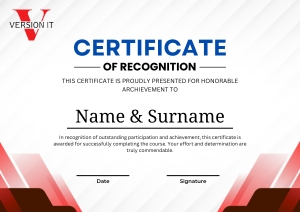
- This certification is intended for individuals who wish to prove they are proficient with the Data Analytics
- Certifications enhance your programming resume and are globally recognised.
- Certificates of completion are given out after the training.
Start Your Data Analytics Journey Today
- Our Data Analytics Online Training in Hyderabad isn’t about stuffing theory—it’s about getting you job-ready. Learn by doing. Build real-world projects. You’ll learn by doing, working on real-world projects that actually prepare you for the workplace. Get certified. And get placed.
- Ready to transform your career?
- Ready to turn data into your strongest asset?
- Enroll Now and Step Into The Future of Data Analytics.
FAQ's
Enquiry Form
Trustindex verifies that the original source of the review is Google. Version IT is the perfect place for Python Training in Hyderabad. The trainers explain every concept step by step, making it easy even for beginners. The institute provides practical exercises, projects, and interview preparation. I learned a lot and gained confidence to work in Python-related roles. I’m thankful for the wonderful training experience here.Posted onTrustindex verifies that the original source of the review is Google. My experience with Version IT’s Python Training in Hyderabad was excellent. The trainers are very knowledgeable and supportive. They teach with real-time examples and ensure every student understands the topics well. The curriculum is industry-oriented with hands-on practice. Thanks to their guidance, I am confident in building Python applications. Version IT is highly recommended!Posted onTrustindex verifies that the original source of the review is Google. My experience at Version IT’s Azure Data Engineer Training in Hyderabad was truly outstanding. The trainers have deep industry expertise and focus on real-time implementation of Azure services. The curriculum includes data pipelines, cloud integration, and visualization tools. The institute also provides mock interviews and job assistance. Thanks to Version IT, I developed the skills required to excel as an Azure Data Engineer.Posted onTrustindex verifies that the original source of the review is Google. Version IT’s Python Full Stack Training in Hyderabad provided me with excellent technical knowledge and hands-on experience. The trainers are highly experienced and explain each concept clearly. The course covers Python, Django, React, and database integration in detail. The institute also provides real-time projects and placement support, helping me start my career confidently as a Full Stack Developer. Highly recommended!Posted onTrustindex verifies that the original source of the review is Google. Version IT offers outstanding Java Full Stack Training in Hyderabad. The faculty is very experienced and focuses on both theory and practical learning. The course structure is well-designed with hands-on projects that enhance coding and problem-solving skills. The environment is motivating, and the placement team is very supportive. I’m thankful to Version IT for shaping my development career.Posted onTrustindex verifies that the original source of the review is Google. My experience with Version IT’s Java Full Stack Training in Hyderabad was excellent. The trainers provide step-by-step guidance and explain real-world applications. The course covers all modern tools and technologies like Java, React, Spring Boot, and MySQL. Their mock interviews and career assistance helped me get job-ready. Version IT truly provides industry-oriented full-stack developer training.Posted onTrustindex verifies that the original source of the review is Google. Version IT’s Python Full Stack Training in Hyderabad exceeded my expectations. The trainers are experts who teach using real-time projects, ensuring deep understanding. The course focuses on both frontend and backend technologies like Python, Django, and JavaScript. Their career counseling and placement support were very helpful. I’m truly grateful to Version IT for shaping my path as a Full Stack Developer.Posted onTrustindex verifies that the original source of the review is Google. Version IT’s Azure Data Engineer Training in Hyderabad was an exceptional learning experience. The trainers are knowledgeable and provide in-depth understanding of Azure tools, data pipelines, and cloud storage. The course includes real-time projects and hands-on practice, which improved my technical skills. Thanks to Version IT’s expert guidance and placement support, I was able to confidently begin my career as a Data Engineer.Posted onTrustindex verifies that the original source of the review is Google. Version IT provides the best Azure Data Engineer Training in Hyderabad with a perfect blend of theory and practical sessions. The trainers focus on real-world cloud data engineering applications using Azure services. The learning environment is interactive, and the placement support is excellent. I’m grateful to Version IT for providing such comprehensive training that prepared me for a successful data engineering career.Posted onTrustindex verifies that the original source of the review is Google. Enrolling in Version IT’s Azure Data Engineer Training in Hyderabad was one of my best career decisions. The course is well-structured, covering data storage, transformation, and analytics using Azure tools. The trainers are patient and explain complex concepts in a simple manner. The institute’s placement support and hands-on sessions helped me become confident in real-time project handling. Highly recommend Version IT!
Our Popular Blogs