
Micro Services Training in Hyderabad
Microservices is Programming Technique also Known as a Micro Services or Microservices Architecture, and it is type of Service Oriented Architecture (SOA) style with we can design a huge application as a collection of modular services.This module can define a particular business goal to understand in a simple way, This architecture generally enables the continuous deployment of complex and Large applications. Microservices Training will cover all the concepts with in-depth knowledge transform to a learner
What is Microservices ?
Using the microservices programming approach, a large application is created as a group of independent services. Every module can manage a certain business objective and communicate with other service models via a very straightforward, well-defined interface.
What are the requirements to learn Microservices?
Awareness of Java programming Knowledge of newest editions of Spring Framework. Ease for a concepts such as Application Context, Profiles, Rest Template, @Value, @Auto wired, @Component, Java Configuration, etc. Fundamental knowledge of Maven.

Topics You will Learn
- Evolution Of MicroServices
- What are MicroServices
- A honey Comb Analogy
- Principles Of MicroServices
- Characteristics Of Micro Services
- Monolithic architecture overview
- Limitation of Monolithic architecture
- Solution with MicroServices
- with SOA
with Twelve-Factor apps - MicroServices use cases
- MicroServices Benefits
- Designing Service-to-service
- Communication
Synchronous Stye - Communication
asynchronous Stye - Communication
MicroService Per JVM - Can microservices share data stores?
- User interfaces in microservices
- Microservices challenges
- The microservices capability model
- Microservices
- Evolution
- A Case Study
- Understanding the NovelHealthCare application
- Microservices Target Architecture
- Internal layering of microservices orchestration of microservices
- Setting up a development environment
- Best Practices and Common Principles
- NovelHealthCare Project Overview
- Implementing super admin, admin, doctor, and patient microservices
- Controller Components
- Service Components
- Entity/Domain Components
- Repository Components
- Execution
- Testing
Let Your Certificates Speak
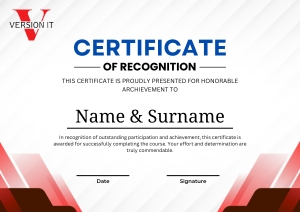
- Comprehensive training in Mircoservices.
- Certifications improve your programming profile and are accepted across the world.
- Certificates are issued upon the course's conclusion.
All You Need to Start this Course
- This succinct statement highlights the necessity of dissecting the layers of the microservices architecture and exploring the subtleties of scalability, modularization, and the dynamic interaction of separate services.
- This little example highlights how crucial it is to foresee a system's changing requirements and make sure that every microservice can work together harmoniously while still having the freedom to grow on its own. Scalability emerges as a central theme in the microservices architecture orchestration in this succinct pre-review.
FAQ's
Microservices divide an application into tiny, modular services that can be created, deployed, and scaled individually, whereas a monolithic architecture develops, deploys, and scales the entire programme as a single unit.
Scalability: The capacity to scale services separately.
Flexibility: Simpler options for each service's technological stack.
Fault Isolation: The application as a whole is not impacted when a single service fails.
Continuous Deployment: Every service has the ability to be launched on its own.
Complexity: There are inherent complexity in distributed systems.
Data management: overseeing cross-service interactions and data integrity.
Finding and interacting with services in a dynamic manner is known as service discovery.
Testing: Extensive testing gets more intricate.
Enquiry Form
Trending Courses
Trustindex verifies that the original source of the review is Google. Version IT is the perfect place for Python Training in Hyderabad. The trainers explain every concept step by step, making it easy even for beginners. The institute provides practical exercises, projects, and interview preparation. I learned a lot and gained confidence to work in Python-related roles. I’m thankful for the wonderful training experience here.Posted onTrustindex verifies that the original source of the review is Google. My experience with Version IT’s Python Training in Hyderabad was excellent. The trainers are very knowledgeable and supportive. They teach with real-time examples and ensure every student understands the topics well. The curriculum is industry-oriented with hands-on practice. Thanks to their guidance, I am confident in building Python applications. Version IT is highly recommended!Posted onTrustindex verifies that the original source of the review is Google. My experience at Version IT’s Azure Data Engineer Training in Hyderabad was truly outstanding. The trainers have deep industry expertise and focus on real-time implementation of Azure services. The curriculum includes data pipelines, cloud integration, and visualization tools. The institute also provides mock interviews and job assistance. Thanks to Version IT, I developed the skills required to excel as an Azure Data Engineer.Posted onTrustindex verifies that the original source of the review is Google. Version IT’s Python Full Stack Training in Hyderabad provided me with excellent technical knowledge and hands-on experience. The trainers are highly experienced and explain each concept clearly. The course covers Python, Django, React, and database integration in detail. The institute also provides real-time projects and placement support, helping me start my career confidently as a Full Stack Developer. Highly recommended!Posted onTrustindex verifies that the original source of the review is Google. Version IT offers outstanding Java Full Stack Training in Hyderabad. The faculty is very experienced and focuses on both theory and practical learning. The course structure is well-designed with hands-on projects that enhance coding and problem-solving skills. The environment is motivating, and the placement team is very supportive. I’m thankful to Version IT for shaping my development career.Posted onTrustindex verifies that the original source of the review is Google. My experience with Version IT’s Java Full Stack Training in Hyderabad was excellent. The trainers provide step-by-step guidance and explain real-world applications. The course covers all modern tools and technologies like Java, React, Spring Boot, and MySQL. Their mock interviews and career assistance helped me get job-ready. Version IT truly provides industry-oriented full-stack developer training.Posted onTrustindex verifies that the original source of the review is Google. Version IT’s Python Full Stack Training in Hyderabad exceeded my expectations. The trainers are experts who teach using real-time projects, ensuring deep understanding. The course focuses on both frontend and backend technologies like Python, Django, and JavaScript. Their career counseling and placement support were very helpful. I’m truly grateful to Version IT for shaping my path as a Full Stack Developer.Posted onTrustindex verifies that the original source of the review is Google. Version IT’s Azure Data Engineer Training in Hyderabad was an exceptional learning experience. The trainers are knowledgeable and provide in-depth understanding of Azure tools, data pipelines, and cloud storage. The course includes real-time projects and hands-on practice, which improved my technical skills. Thanks to Version IT’s expert guidance and placement support, I was able to confidently begin my career as a Data Engineer.Posted onTrustindex verifies that the original source of the review is Google. Version IT provides the best Azure Data Engineer Training in Hyderabad with a perfect blend of theory and practical sessions. The trainers focus on real-world cloud data engineering applications using Azure services. The learning environment is interactive, and the placement support is excellent. I’m grateful to Version IT for providing such comprehensive training that prepared me for a successful data engineering career.Posted onTrustindex verifies that the original source of the review is Google. Enrolling in Version IT’s Azure Data Engineer Training in Hyderabad was one of my best career decisions. The course is well-structured, covering data storage, transformation, and analytics using Azure tools. The trainers are patient and explain complex concepts in a simple manner. The institute’s placement support and hands-on sessions helped me become confident in real-time project handling. Highly recommend Version IT!
Our Popular Blogs
Generative AI Training in Bangalore: APIs, Langchain, RAG, and Deployment Skills
Python Full Stack Training in Bangalore: How to Build Your First Web Application

How to Create a Python Developer Resume After Completing Training