Django Training in Hyderabad
Do you want to become a skilled web developer? You don’t need to search any further!
Version IT provides comprehensive and industry-driven Django training in Hyderabad, preparing you to thrive in the dynamic world of web development.
Django Training in Hyderabad: Uncovering the Web Development Power
Django is a high-level Python web framework that serves as the foundation for many successful web applications and websites. Our Django training in Hyderabad is meticulously designed to introduce you to the fundamentals of web development, ensuring you understand the complexities of creating robust and scalable applications.
Course Characteristics
Our Django course in Hyderabad is designed by seasoned professionals with real-world experience. Here’s a taste of what to expect:
- Comprehensive Curriculum: Dive deep into Django fundamentals, including topics like models, templates, and views. Gain practical experience by working on projects that simulate real-world scenarios.
- Industry-Related Projects: Put your knowledge to use by working on projects that reflect the challenges that professionals in the field face. This hands-on approach ensures that you are job-ready upon completion of the course.
- Expert Advice: Get personalized advice from industry experts who share their insights and experiences to help you navigate the complexities of Django development.
Engage in interactive sessions, discussions, and collaborative projects to create a dynamic learning environment that will improve your understanding and retention of Django concepts.
Outcomes That Advance Your Career
After finishing our Django course in Hyderabad, you’ll be able to:
- Django mastery: Gain a thorough understanding of Django’s architecture, allowing you to confidently build secure and scalable web applications.
- Problem-Solving Skills: Work on real-world projects to improve your ability to troubleshoot and innovate in a professional setting.
- Certification: Acquire a certification from Version IT, a renowned Django training institute in Hyderabad, to validate your expertise and set yourself apart in the competitive job market.
Pre-requisites
To make the most of AWS training, it is recommended to have the following prerequisites:
Basic Programming Knowledge: Familiarity with programming languages such as Python, Java, or Ruby will be advantageous. It helps in understanding and working with AWS SDKs and automation.
Networking Concepts: A basic understanding of networking concepts like IP addressing, TCP/IP, subnets, and routing will aid in designing and managing AWS networks effectively.
System Administration Skills: Having knowledge of Linux/Unix systems, command-line interfaces, and server administration will be valuable for deploying and managing applications on AWS.

Topics You will Learn
- What is WEB?
- Features of WEB?
- Introduction to HTML & HTML5
- Introduction to CSS &CSS3
- Introduction to JAVASCRIPT
- Introduction to Bootstrap
- Creating Basic Web Pages
- Introduction to SCRIPTS
- What is a Framework
- Introduction to Django
- Django – Design Philosophies
- History of Django
- Django Features
- Environment setup
- Web Server
- Creating the first Project
- Integrating the Project to PYCHARM & Other IDEs
- The Project Structure
- Running the in the server
- Setting Up Your Project
- Create and configure Django apps
- Django App Structure
- Configuring App in Project
- What is URL?
- Define URL patterns
- What is View
- Configure URLs
- Developing different views
- Django URL Mapping
- Configuring URLconf’s
- Django URL Functions
- Path()
- Re_path()
- URL Patterns App Level and Project Level
- Include()
- Define Django Template
- Django MVT Pattern
- Django Template Configuration
- render() function
- Django Template Language
- Template Tags or Template Variables
- String interpolation
- What is a context?
- Define Context Processor?
- include Static Files inside Template
- Configuring static files
- Creating Project with static resources
- HTML, CSS, Images
- Define Database?
- Define DBMS, RDBMS?
- What is Model?
- Database Configuration
- How to Check Django Database Connection
- Configuration of MySQL Database
- SQLite
- Defining Django Models
- Django Model Fields
- Field Options
- What is a Migration?
- migrate Command
- Creation of Super User
- Register Model Inside Admin Interface
- Difference between makemigrations and migrate
- Define QuerySet
- The Python Template Engine
- Define Jinja2
- Faker Module
Let Your Certificates Speak
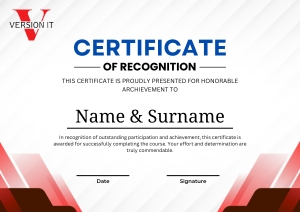
- Comprehensive training Certified in Django Building Robust Web Applications
- Certifications improve your programming profile and are accepted across the world.
- Certificates are issued upon the course's conclusion.
All You Need to Start this Course
- A computer/mobile device with an internet connection.
- Before diving into Django, it's beneficial to have a good understanding of certain technologies and concepts
FAQ's
Django is a high-level web framework written in Python that encourages rapid development and clean, pragmatic design. It follows the Model-View-Controller (MVC) architectural pattern, emphasizing reusability, pluggability, and the "Don't Repeat Yourself" (DRY) principle.
Django simplifies the development of web applications by providing a robust set of tools and conventions. It includes an ORM (Object-Relational Mapping) system, an admin interface, URL routing, form handling, and more. Django's "batteries-included" philosophy means many common tasks are handled out of the box.
Enquiry Form
Trending Courses
Trustindex verifies that the original source of the review is Google. Version IT is the perfect place for Python Training in Hyderabad. The trainers explain every concept step by step, making it easy even for beginners. The institute provides practical exercises, projects, and interview preparation. I learned a lot and gained confidence to work in Python-related roles. I’m thankful for the wonderful training experience here.Posted onTrustindex verifies that the original source of the review is Google. My experience with Version IT’s Python Training in Hyderabad was excellent. The trainers are very knowledgeable and supportive. They teach with real-time examples and ensure every student understands the topics well. The curriculum is industry-oriented with hands-on practice. Thanks to their guidance, I am confident in building Python applications. Version IT is highly recommended!Posted onTrustindex verifies that the original source of the review is Google. My experience at Version IT’s Azure Data Engineer Training in Hyderabad was truly outstanding. The trainers have deep industry expertise and focus on real-time implementation of Azure services. The curriculum includes data pipelines, cloud integration, and visualization tools. The institute also provides mock interviews and job assistance. Thanks to Version IT, I developed the skills required to excel as an Azure Data Engineer.Posted onTrustindex verifies that the original source of the review is Google. Version IT’s Python Full Stack Training in Hyderabad provided me with excellent technical knowledge and hands-on experience. The trainers are highly experienced and explain each concept clearly. The course covers Python, Django, React, and database integration in detail. The institute also provides real-time projects and placement support, helping me start my career confidently as a Full Stack Developer. Highly recommended!Posted onTrustindex verifies that the original source of the review is Google. Version IT offers outstanding Java Full Stack Training in Hyderabad. The faculty is very experienced and focuses on both theory and practical learning. The course structure is well-designed with hands-on projects that enhance coding and problem-solving skills. The environment is motivating, and the placement team is very supportive. I’m thankful to Version IT for shaping my development career.Posted onTrustindex verifies that the original source of the review is Google. My experience with Version IT’s Java Full Stack Training in Hyderabad was excellent. The trainers provide step-by-step guidance and explain real-world applications. The course covers all modern tools and technologies like Java, React, Spring Boot, and MySQL. Their mock interviews and career assistance helped me get job-ready. Version IT truly provides industry-oriented full-stack developer training.Posted onTrustindex verifies that the original source of the review is Google. Version IT’s Python Full Stack Training in Hyderabad exceeded my expectations. The trainers are experts who teach using real-time projects, ensuring deep understanding. The course focuses on both frontend and backend technologies like Python, Django, and JavaScript. Their career counseling and placement support were very helpful. I’m truly grateful to Version IT for shaping my path as a Full Stack Developer.Posted onTrustindex verifies that the original source of the review is Google. Version IT’s Azure Data Engineer Training in Hyderabad was an exceptional learning experience. The trainers are knowledgeable and provide in-depth understanding of Azure tools, data pipelines, and cloud storage. The course includes real-time projects and hands-on practice, which improved my technical skills. Thanks to Version IT’s expert guidance and placement support, I was able to confidently begin my career as a Data Engineer.Posted onTrustindex verifies that the original source of the review is Google. Version IT provides the best Azure Data Engineer Training in Hyderabad with a perfect blend of theory and practical sessions. The trainers focus on real-world cloud data engineering applications using Azure services. The learning environment is interactive, and the placement support is excellent. I’m grateful to Version IT for providing such comprehensive training that prepared me for a successful data engineering career.Posted onTrustindex verifies that the original source of the review is Google. Enrolling in Version IT’s Azure Data Engineer Training in Hyderabad was one of my best career decisions. The course is well-structured, covering data storage, transformation, and analytics using Azure tools. The trainers are patient and explain complex concepts in a simple manner. The institute’s placement support and hands-on sessions helped me become confident in real-time project handling. Highly recommend Version IT!
Our Popular Blogs

Top 5 Benefits of Snowflake Training in Hyderabad for Students and Freshers

6 Generative AI Tools and Technologies Every Learner Should Know
Data Science Training in Hyderabad: Course, Fees, Syllabus & Placements

Why Cyber Security SOC Analyst Training in Hyderabad Is Important for Students Starting Their IT Careers
How Can GCP Data Engineer Training Help Students Start Their Tech Careers?