
⭐ 4.9/5 Rating
Based on 6,000+ student reviews
🎓 10,000+ Enrolled
Students worldwide
👨🏫 10+ Years Experience
Industry expert trainers
📈 90% Placement Success
Students placed in top companies
📅 Course Duration
2 Months
💰 Course Price
₹ 35000
🎥 Watch Demo
📄 Course Content
Cyber Security Training in Chennai
Become a cyber defender with industry-ready skills through Cyber Security Training in Chennai. Gain hands-on experience with practical labs, expert mentors, and real-world projects.
Why Cyber Security Training?
The threats in this digital era are developing most rapidly. Companies in industries IT services, finance, healthcare, manufacturing, e-commerce, etc. have to deal with an unceasing flow of attacks: malware, ransomware, phishing, insider attack, zero-day attacks, DDoS, etc. As a booming technology center, Chennai is not an exception – the local companies require competent defenders.
That is where the Version IT which is one of the best Cyber Security Training in Chennai comes in. We fill the gap between theory and practice. Our mission is to create professionals not only knowledgeable in security, but capable of detecting, defending and responding.
Cyber Security Training in Chennai Features & Highlights
We base our Cyber Security course in Chennai program on the principles of practical immersion, tools, labs, and real-life situations are the core of our training program. Key features:
Live Instructor‑Led Sessions | Hands‑On Labs & Virtual Environments |
Real‑World Projects & Case Studies | Mentorship & Doubt Resolution |
Certification Training & Support | Placement Assistance |
Benefits of Choosing Cyber Security Training
Here are the advantages of taking Cyber Security Training in Chennai:
- Safe systems and networks with the mastered ethical hacking methods.
- Conducting penetration tests and vulnerability testing.
- Better the fortification by Locating and exploiting loopholes in the security system.
- Protect web applications, cloud environment and databases.
- Extensive knowledge of cyber security models and regulatory requirements.
Cyber Security Course Curriculum & Modules
Our Cyber Security Course in Chennai modules and topics are separated and explained below:
Module | Topics Covered |
Introduction of Cyber Security | Here you will learn Security goals, threat models, risk assessment, cryptography basics |
Networking & Infrastructure Security | TCP/IP stack, subnets, routing, firewalls, IDS/IPS, network segmentation, VPNs |
Endpoints Security and OS | Patching, privilege escalation, Secure OS configuration (Linux/Windows) |
Cloud & IoT Security | AWS/ Azure controls, container and Kubernetes, API, IoT vulnerability. |
Capstone / Real‑World Projects | Combined challenges — red team / blue team tasks, full assessments, reporting |
Certification & Career Guidance | Prep of exams, interview coaching, portfolio preparation. |
Eligibility to Enroll in our Cyber Security Training
The Cyber Security Ethical Hacking Training Program is beneficial to beginners and professionals who believe in improving their knowledge on cyber security. In addition to that, a particular level of education is not mandatory but a middle level of knowledge about IT or networking is a plus. Below are the eligibility criteria:
- One should pose any degree – B. Tech, BSc, B.Com, BBA etc.
- Total IT and Non-IT Branches CSE, EEE, Civil, Mech, Bio, etc.
- You should have basic networking knowledge
- No CGPA cut-off. The career gap is not a barrier.
Key Facts of Version IT for Cyber Security Online Training in Chennai
Student Centered Training Approach
The Version IT is extremely devoted to the success of the students and provides them with a Job Oriented Intensive Program (JOIP) which is aimed at the development of the real-life skills and competencies needed in the contemporary competitive job market.
Proven Track Record
Since its time of glory, Version IT has been training more than 50,000 students giving them the power to operate in the industry with the knowledge and technical skills that are appropriate. The institute has assisted 15,000 + students to secure placements at different levels in the leading companies.
Expert-Led Training
All the courses will be provided by the real-time expertise in the industry, so students will receive the knowledge of those who are in the field and are working. Such practical exposure will contribute so much value towards the learning experience.
Excellent Industry Patronage
Version IT has formed alliances with 250 and above companies that have developed strong placement pipelines and provided more opportunities to its students.
Up skilling Programs in Corporate
The institute has been able to provide training to the employees of 15 or more BPOs and back-office/operations teams on the emerging IT trends, in order to keep businesses competitive in the digital age
Cyber Security Training Certification & Career Opportunities
This training will allow one to work in various positions, including:
- Security Analyst
- Pen Tester / White Hat Hacker.
- Incident Response / Forensic Specialist.
- SOC Engineer
- Security Consultant
- Application / Cloud Security Engineer.
Topics You will Learn
● What is Cybersecurity?
● Threats, vulnerabilities, and risks
● Types of cyber attacks (malware, phishing, DDoS, ransomware)
● Cybersecurity domains (network, application, endpoint, cloud, etc.)
● Security goals: Confidentiality, Integrity, Availability (CIA Triad)
● Cybersecurity frameworks: NIST, ISO/IEC 27001
● Who are hackers? Black Hat, White Hat, Grey Hat
● Principles of ethical hacking
● Legal considerations and compliance (Computer Fraud and Abuse Act, GDPR,
HIPAA)
● Penetration testing lifecycle
● Bug bounty programs and responsible disclosure
● Installing and configuring VMware/VirtualBox for a controlled testing
environment
● Installing Kali Linux and setting up essential tools (Metasploit, Nmap, Burp
Suite)
● Configuring a target machine (e.g., Metasploitable) for penetration testing
practice
● OSI & TCP/IP models
● IP addressing, DNS, DHCP, NAT
● Ports and protocols (TCP, UDP, ICMP)
● Network scanning basics
● Wireshark & packet analysis
● Configure a virtual network with multiple machines (attacker, target, defender)
● Perform basic ping tests, and use traceroute to understand network topology
● Analyze network traffic using Wireshark to capture TCP/IP packets and identify
protocols and ports
● Passive vs active reconnaissance
● WHOIS, nslookup, Shodan
● Google hacking and OSINT tools
● Social engineering basics
● Use Nmap for network mapping and service discovery on a target network
● Perform a WHOIS lookup, DNS enumeration, and search for subdomains
● Conduct Google Dorking for OSINT and perform Maltego data collection
● Engage in a simulated social engineering attack using phishing techniques
● Port scanning with Nmap
● Banner grabbing and version detection
● Identifying services and vulnerabilities
● SMB, SNMP, NetBIOS enumeration
● Conduct port scanning and service detection using Nmap on a target network
● Use Nessus to perform a vulnerability assessment of a target machine
● Perform SMB enumeration and SNMP enumeration on a network of machines
● Exploitation basics (Metasploit framework)
● Password attacks (Brute-force, Dictionary, Rainbow tables)
● Privilege escalation (Linux & Windows)
● Maintaining access and clearing tracks
● Use Metasploit to exploit vulnerabilities in a controlled lab environment
● Develop custom exploits using Metasploit and execute them in a controlled
setup
● OWASP Top 10 (XSS, SQLi, CSRF, SSRF, etc.)
● Burp Suite intro
● Input validation and parameter tampering
● Exploiting authentication flaws
● Use Burp Suite to intercept HTTP requests and test for vulnerabilities like SQL
injection and XSS
● Conduct a SQL injection attack on a vulnerable web application
● Perform Cross-Site Scripting (XSS)
● Implement session hijacking techniques in a vulnerable application
● Types of malware (viruses, worms, trojans, RATs)
● Static and dynamic malware analysis
● Exploit development basics
● Antivirus evasion and encoding
● Introduction to Defensive Security
● Blue Team vs Red Team vs Purple Team
● Security controls (preventive, detective, corrective)
● Firewall, IDS/IPS, SIEM tools (Splunk)
● Endpoint security: Antivirus, EDR (Endpoint Detection and Response)
● Configure and test an Intrusion Detection System (IDS) using tools like Snort
● Implement and test firewall rules
● What is a SOC?
● SOC tiers: Tier 1 (monitoring), Tier 2 (analysis), Tier 3 (threat hunting)
● Role of SIEM (Security Information and Event Management)
● Common SOC tools: ELK Stack, Splunk, AlienVault
● Log sources: firewall, endpoint, proxy, authentication systems
● Threat monitoring and incident detection
● Event triage and escalation
● Incident response and containment
● Forensics and root cause analysis
● Reporting and compliance
● Threat intelligence lifecycle
● IOC vs IOA
● Cyber kill chain and MITRE ATT&CK
● Incident response lifecycle (Preparation, Detection, Containment, Eradication,
Recovery)
● Forensic acquisition tools (FTK Imager, Autopsy)
● Perform incident response simulations to handle security breaches and gather
forensic data
● Introduction to CTF competitions and platforms (e.g., Hack The Box,
TryHackMe)
● Hands-on challenges: Solving real-world cybersecurity puzzles in a simulated
environment
● Practical application of penetration testing and defense strategies learned
throughout the course
● Participate in a CTF competition to solve real-world puzzles
Let Your Certificates Speak
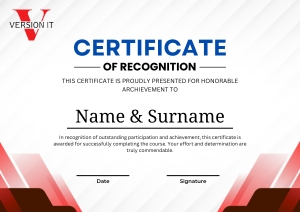
- Comprehensive training in cybersecurity requires a combination of theoretical knowledge, practical skills, and hands-on experience.
- Certificates are globally recognized & they upgrade your programming profile.
- Certificates are generated after the completion of course.
All You Need to Start this Course
- Engaging and interactive course content.
- Expert-led instruction for a deeper understanding.
FAQ's
Although some basic level of knowledge in code or scripting (in Python or Bash) can be beneficial, one is not required to begin this course. Our training will be able to suit beginners. We present necessary concepts of coding and take you through the process of using scripts in any cyber security activity like automation, vulnerability scan, or exploit development. You will only know what you need to know and you will not require any background in programming.
The tools we use are quite numerous in terms of industry-standard tools such as Kali Linux, Metasploit, Burp Suite, Nmap, Wireshark, Volatility, and many others. These are the same tools that professionals working in real life apply. You will have access to all the classical software and laboratory environments without having to buy anything on top.
Although we do not guarantee employment, we do have in place very strong placement services - resume construction, interview coaching and placement via hiring firms. Lots of our students will secure jobs soon after taking the course.
Absolutely! Before getting the training, you can demand a free demo session to see the training style.
We have flexible batches such as weekday evenings, weekends and full-time to find the right scheduling.
Enquiry Form
Trustindex verifies that the original source of the review is Google. Version IT is the perfect place for Python Training in Hyderabad. The trainers explain every concept step by step, making it easy even for beginners. The institute provides practical exercises, projects, and interview preparation. I learned a lot and gained confidence to work in Python-related roles. I’m thankful for the wonderful training experience here.Posted onTrustindex verifies that the original source of the review is Google. My experience with Version IT’s Python Training in Hyderabad was excellent. The trainers are very knowledgeable and supportive. They teach with real-time examples and ensure every student understands the topics well. The curriculum is industry-oriented with hands-on practice. Thanks to their guidance, I am confident in building Python applications. Version IT is highly recommended!Posted onTrustindex verifies that the original source of the review is Google. My experience at Version IT’s Azure Data Engineer Training in Hyderabad was truly outstanding. The trainers have deep industry expertise and focus on real-time implementation of Azure services. The curriculum includes data pipelines, cloud integration, and visualization tools. The institute also provides mock interviews and job assistance. Thanks to Version IT, I developed the skills required to excel as an Azure Data Engineer.Posted onTrustindex verifies that the original source of the review is Google. Version IT’s Python Full Stack Training in Hyderabad provided me with excellent technical knowledge and hands-on experience. The trainers are highly experienced and explain each concept clearly. The course covers Python, Django, React, and database integration in detail. The institute also provides real-time projects and placement support, helping me start my career confidently as a Full Stack Developer. Highly recommended!Posted onTrustindex verifies that the original source of the review is Google. Version IT offers outstanding Java Full Stack Training in Hyderabad. The faculty is very experienced and focuses on both theory and practical learning. The course structure is well-designed with hands-on projects that enhance coding and problem-solving skills. The environment is motivating, and the placement team is very supportive. I’m thankful to Version IT for shaping my development career.Posted onTrustindex verifies that the original source of the review is Google. My experience with Version IT’s Java Full Stack Training in Hyderabad was excellent. The trainers provide step-by-step guidance and explain real-world applications. The course covers all modern tools and technologies like Java, React, Spring Boot, and MySQL. Their mock interviews and career assistance helped me get job-ready. Version IT truly provides industry-oriented full-stack developer training.Posted onTrustindex verifies that the original source of the review is Google. Version IT’s Python Full Stack Training in Hyderabad exceeded my expectations. The trainers are experts who teach using real-time projects, ensuring deep understanding. The course focuses on both frontend and backend technologies like Python, Django, and JavaScript. Their career counseling and placement support were very helpful. I’m truly grateful to Version IT for shaping my path as a Full Stack Developer.Posted onTrustindex verifies that the original source of the review is Google. Version IT’s Azure Data Engineer Training in Hyderabad was an exceptional learning experience. The trainers are knowledgeable and provide in-depth understanding of Azure tools, data pipelines, and cloud storage. The course includes real-time projects and hands-on practice, which improved my technical skills. Thanks to Version IT’s expert guidance and placement support, I was able to confidently begin my career as a Data Engineer.Posted onTrustindex verifies that the original source of the review is Google. Version IT provides the best Azure Data Engineer Training in Hyderabad with a perfect blend of theory and practical sessions. The trainers focus on real-world cloud data engineering applications using Azure services. The learning environment is interactive, and the placement support is excellent. I’m grateful to Version IT for providing such comprehensive training that prepared me for a successful data engineering career.Posted onTrustindex verifies that the original source of the review is Google. Enrolling in Version IT’s Azure Data Engineer Training in Hyderabad was one of my best career decisions. The course is well-structured, covering data storage, transformation, and analytics using Azure tools. The trainers are patient and explain complex concepts in a simple manner. The institute’s placement support and hands-on sessions helped me become confident in real-time project handling. Highly recommend Version IT!
Our Popular Blogs

Why Do Career Switchers Struggle to Enter Data Science After Training in Hyderabad?

How Generative AI Training Helps You Build Practical AI Development Skills