Oracle Training in Hyderabad
Oracle Training in Hyderabad is the process of blending Oracle database with MS’s .Net Framework in order to give developers room for constructing advanced software with high capacity expansion.
Overview
Developers can take advantage of Oracle’s database power in the well-known .NET environment, enabling efficient data manipulation and high-performing applications.
With the use of Oracle in .Net, there are varied benefits such as easy connection to Oracle Database for fast access to data, optimization of data accessing and manipulation, and added security measures. ODP.NET is compatible with ADO.NET, thus enabling developers to interact easily with databases. Furthermore, the partnership creates a strong base for scaling out and solid applications on .NET which have extensive usage of Oracle’s sophisticated components.
One will, therefore, realize that choosing an Oracle Course in a VersionIt Training Institute is rewarding. Specialized teachers help one to understand the detailed information of version control software such as Git that enhances teamwork in coding. Ultimately, it is Better for career advancement and growth.
Oracle Course Objectives
The objectives encompass providing participants with a comprehensive understanding of The application of Oracle in .Net also brings diverse gains including easy linking with the Oracle database for quick information retrieval, data access and modifications enhancement, and improved safety precautions. Therefore, ODP.NET is integrated with ADO.NET which helps the developer to communicate with the database easily. Moreover, this union forms a solid footing for broadening applications in Microsoft’s powerful .NET framework that depend heavily on Oracle’s intricate modules.
To sum it up Oracle courses in .NET is to provide individuals with the capacity of incorporating Oracle databases within .NET programs for proper maintenance and exchange of information between these systems.

Topics You will Learn
- Approach to Data Management
- Introduction to prerequisites
- File and Filesystem
- Disadvantages of file
- Review of Database Management Terminology
- Database Models
- Hierarchal Model
- Network Model
- Relational Mode
- Feature of RDBMS
- Advantages of RDBMS over FMS ad DBMS
- The 12 rules (E.F Codd’s Rules –RDBMS)
- Need for Database Design
- Support of Normalization Process for Data Management
- Client-Server Technology
- Oracle Corporation Products
- Oracle Versions
- About SQL&SQL*PLUS
- Oracle Pre Defined Datatypes
- DDL Commands
- Create, Alter (add, modify, rename, drop)Columns, Rename, truncate, drop
- DML-Insert, update, delete
- DQL-SELECT Statements using WHEREclause
- Comparison and Conditional Operators
- Arithmetic and Logical Operators
- Set Operators (UNION, UNION ALL, INTERSECT, MINUS)
- Special Operators – IN (NOT IN), BETWEEN (NOT BETWEEN), LIKE (NOT LIKE), IS NULL (IS NOT NULL)
- Working with DML, DRL Commands
- Operators Support
- Data Definition Language (DDL)
- Data Retrieval Language (DRL)
- Data Manipulation Language (DML)
- Transaction Control Language (TCL)
- Database Security and Privileges (DCL)
- Arithmetic Functions, Character Functions, Date Functions, Conversion Functions
- Aggregate Functions, OLAP Functions & General Functions
- Using Group by and Having Clause of DRL Statement
- Using Order by clause
Let Your Certificates Speak
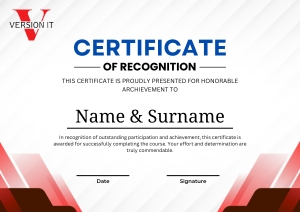
- Oracle Power Unlocked: Certified and Excel-Ready
- Certifications improve your programming profile and are accepted across the world.
- Certificates are issued upon the course's conclusion.
All You Need to Start this Course
- The Programming Language C#
- Framework for.NET
- Visual Studio
- Database and SQL Concepts
FAQ's
Oracle.NET is the name given to the integration of the Oracle Database with the Microsoft.NET platform. It makes it possible for programmers to write.NET applications that interface with Oracle databases.
While not always necessary, having a basic knowledge of Oracle Database concepts is helpful. A basic understanding of connecting to and using an Oracle database might be helpful.
While it's recommended to have a basic understanding of programming concepts, certain courses may be designed with complete novices in mind. It's important to read the prerequisites and course description to determine the required level of experience.
After completing an Oracle.NET course, opportunities for work as a database developer, software engineer, or.NET developer with a focus on integrating.NET applications with Oracle databases may become accessible.
Enquiry Form
Full Stack Courses
Trustindex verifies that the original source of the review is Google. Version IT is the perfect place for Python Training in Hyderabad. The trainers explain every concept step by step, making it easy even for beginners. The institute provides practical exercises, projects, and interview preparation. I learned a lot and gained confidence to work in Python-related roles. I’m thankful for the wonderful training experience here.Posted onTrustindex verifies that the original source of the review is Google. My experience with Version IT’s Python Training in Hyderabad was excellent. The trainers are very knowledgeable and supportive. They teach with real-time examples and ensure every student understands the topics well. The curriculum is industry-oriented with hands-on practice. Thanks to their guidance, I am confident in building Python applications. Version IT is highly recommended!Posted onTrustindex verifies that the original source of the review is Google. My experience at Version IT’s Azure Data Engineer Training in Hyderabad was truly outstanding. The trainers have deep industry expertise and focus on real-time implementation of Azure services. The curriculum includes data pipelines, cloud integration, and visualization tools. The institute also provides mock interviews and job assistance. Thanks to Version IT, I developed the skills required to excel as an Azure Data Engineer.Posted onTrustindex verifies that the original source of the review is Google. Version IT’s Python Full Stack Training in Hyderabad provided me with excellent technical knowledge and hands-on experience. The trainers are highly experienced and explain each concept clearly. The course covers Python, Django, React, and database integration in detail. The institute also provides real-time projects and placement support, helping me start my career confidently as a Full Stack Developer. Highly recommended!Posted onTrustindex verifies that the original source of the review is Google. Version IT offers outstanding Java Full Stack Training in Hyderabad. The faculty is very experienced and focuses on both theory and practical learning. The course structure is well-designed with hands-on projects that enhance coding and problem-solving skills. The environment is motivating, and the placement team is very supportive. I’m thankful to Version IT for shaping my development career.Posted onTrustindex verifies that the original source of the review is Google. My experience with Version IT’s Java Full Stack Training in Hyderabad was excellent. The trainers provide step-by-step guidance and explain real-world applications. The course covers all modern tools and technologies like Java, React, Spring Boot, and MySQL. Their mock interviews and career assistance helped me get job-ready. Version IT truly provides industry-oriented full-stack developer training.Posted onTrustindex verifies that the original source of the review is Google. Version IT’s Python Full Stack Training in Hyderabad exceeded my expectations. The trainers are experts who teach using real-time projects, ensuring deep understanding. The course focuses on both frontend and backend technologies like Python, Django, and JavaScript. Their career counseling and placement support were very helpful. I’m truly grateful to Version IT for shaping my path as a Full Stack Developer.Posted onTrustindex verifies that the original source of the review is Google. Version IT’s Azure Data Engineer Training in Hyderabad was an exceptional learning experience. The trainers are knowledgeable and provide in-depth understanding of Azure tools, data pipelines, and cloud storage. The course includes real-time projects and hands-on practice, which improved my technical skills. Thanks to Version IT’s expert guidance and placement support, I was able to confidently begin my career as a Data Engineer.Posted onTrustindex verifies that the original source of the review is Google. Version IT provides the best Azure Data Engineer Training in Hyderabad with a perfect blend of theory and practical sessions. The trainers focus on real-world cloud data engineering applications using Azure services. The learning environment is interactive, and the placement support is excellent. I’m grateful to Version IT for providing such comprehensive training that prepared me for a successful data engineering career.Posted onTrustindex verifies that the original source of the review is Google. Enrolling in Version IT’s Azure Data Engineer Training in Hyderabad was one of my best career decisions. The course is well-structured, covering data storage, transformation, and analytics using Azure tools. The trainers are patient and explain complex concepts in a simple manner. The institute’s placement support and hands-on sessions helped me become confident in real-time project handling. Highly recommend Version IT!
Our Popular Blogs

5 Essential Skills You’ll Learn During a Professional Cyber Security Course

How to Start Your Career with Data Analytics Training in Hyderabad

8 Hands-On Python Projects to Build During Python Training in Hyderabad